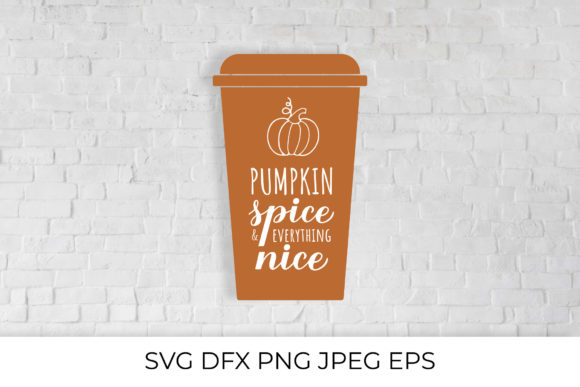
Pumpkin Spice and Everything Nice
First Impressions: Warm, Whimsical, and Ready for Real Fabric
When I opened Pumpkin Spice and Everything Nice, I didn’t see just another fall-themed graphic—I saw a design with immediate tactile potential. The hand-lettered calligraphy wraps gently around a coffee cup silhouette, soft curves balancing crisp letterforms. It’s cozy without being cutesy, seasonal without feeling dated by Thanksgiving. As an embroidery designer who’s stitched hundreds of text-based pieces, I appreciated how the spacing breathes—no cramped kerning, no awkward ligatures that trap thread or distort on stretchy fabric. This isn’t a tight vector meant only for vinyl cutting; it carries the subtle weight and rhythm of ink on paper, which translates beautifully to satin stitch outlines and gentle fill areas.
A Real Project Test: Embroidering It on a Linen-Cotton Kitchen Towel
Last week, I used Pumpkin Spice and Everything Nice for a small-batch run of embroidered kitchen towels for a local boutique. We chose natural linen-cotton blend—textured, slightly uneven, and unforgiving of dense stitching. I resized the design to fit a 4” x 4” hoop, kept the original proportions intact, and ran a test on scrap first. The result? Clean lettering with no skipped stitches, even in the delicate swirls of the “g” and “y.” The coffee cup outline held its shape without overloading the fabric—thanks to moderate stitch density and smart use of running stitch for thin connecting lines. Customers loved how it looked *lived-in* from day one—not stiff or plasticky, but like something they’d reach for every morning.
Where It Shines (and Where It Needs Care)
Pumpkin Spice and Everything Nice excels on mid-weight fabrics where texture supports detail: sweatshirt embroidery, tote bag designs, pillow covers, and aprons. Its organic flow works especially well on curved surfaces like caps—just rotate the cup handle toward the crown seam and let the script follow the curve naturally. For baby embroidery or nursery decor, it reads warmly and legibly at 3.5”, avoiding tiny flourishes that vanish under wash-and-wear.
That said, caution is needed in three real-world spots:
- Dark or heavily textured fabrics: The fine interior details—like the steam curl rising from the cup—can fade visually unless you boost contrast with light thread or add a subtle underlay stitch.
- Stretchy knits (e.g., t-shirts): This isn’t a high-density applique design, so skip heavy stabilizer layers. Use tear-away + light cut-away combo instead—too much stiffness fights the script’s softness.
- Tiny hoops (under 3”): The full coffee cup + script layout won’t scale down gracefully below 3”. For caps or baby onesies, isolate just the phrase “Pumpkin Spice” or “Everything Nice” as a standalone embroidery file—keeping the hand-lettered integrity intact.
What It Adds to Your Finished Product—Beyond Aesthetics
As a craft business owner, I judge designs not just by how they stitch—but by how they land with customers. Pumpkin Spice and Everything Nice elevates perceived value because it feels intentional, not mass-produced. On an Etsy listing for personalized mugs or holiday gifts, it signals care—the kind that makes buyers say, “This was made *for* me.” It strengthens brand consistency for small shops leaning into warm, approachable autumn branding. And for commercial embroidery projects—say, custom staff aprons for a local café—it balances personality with professionalism. No cartoon pumpkins, no glitter fonts—just quiet confidence in its theme.
Designer Notes You’ll Actually Use
Before stitching Pumpkin Spice and Everything Nice into your next handmade product, here’s what I do—and recommend:
- Always test on scrap fabric matching your final substrate—especially if using textured weaves or blends.
- Check thread color contrast in natural light. What reads clearly on screen may disappear on oatmeal linen or charcoal fleece.
- Review stitch density in your embroidery software. If fill areas look overly solid, reduce density by 5–10%—this improves drape and wash durability.
- Confirm hoop size early. The full layout fits comfortably in a 5” hoop, but plan for ¼” margin clearance all around.
- Inspect small details at actual stitch size. Zoom in on the steam line and cup handle joint—they’re fine but not fragile.
- Test black-and-white mockups before finalizing. Does the hierarchy hold? Is “Pumpkin Spice” still the visual anchor?
- Use proper stabilizer for your fabric type—not generic “medium” settings. Linen needs less than cotton poplin; knits need more.
- Verify licensing before selling finished items or digital embroidery files. Since this is listed as a Graphics/Illustrations asset, confirm whether commercial use includes resale of physical embroidered goods—or if it’s limited to personal use or digital redistribution.
Final Thought: Not Just Seasonal—It’s Storytelling Stitched
Pumpkin Spice and Everything Nice works because it doesn’t shout “fall!”—it whispers familiarity. That matters when you’re building trust with Etsy buyers, gifting to friends, or branding a small shop. It’s the kind of machine embroidery design that invites touch, invites pause, and quietly says, “You belong here.” Whether you’re stitching it onto a tea towel for a wedding gift, a patch for a denim jacket, or a custom sweatshirt for your craft fair booth—it holds up. Not as decoration, but as intention. And in handmade work, that distinction is everything.